Pistachios at highest since 2018; hazelnuts and coffee ease
April was the month in which the closure of the Strait of Hormuz in early March reshaped the nut trade: with Iranian exports disrupted, pistachio prices climbed to multi-year highs, Gulf-bound cargo shifted to alternative routes and Türkiye sharply increased its purchases of US almonds, walnuts and pistachios. Heavy Vietnamese raw cashew imports and expectations of a record Brazilian coffee crop eased the supply side, while weak export demand pushed hazelnut and sultana prices lower.
Period: April 2026
Figures of the month
US$4.57/lbGlobal benchmark price, highest since 2018 (28 April)Pistachios
636,000 tVietnam raw cashew imports, Q1 (+12.5%)Cashews
+16.5%California March shipments (258.0 mn lb)Almonds
€8.05/kgNatural kernels 11–13 mm, FOB Istanbul (late April)Hazelnuts
Pistachio prices hit multi-year highs as Hormuz closes
The Iran war that began on 28 February and the closure of the Strait of Hormuz disrupted Iranian exports, and the global benchmark price reached US$4.57/lb on 28 April, its highest level since 2018. According to the ACP report released on 15 April, US shipments in March were 88.0 million lb (+3.4%) and 756.2 million lb season to date (+22.5%); season shipments to Türkiye rose 144%, while March shipments to the UAE almost stopped and shipments to China fell 90%. In Türkiye, drought and irrigation problems are expected to keep the crop at last year’s level, and domestic prices remain firm at high levels.
US$4.57/lbGlobal benchmark price, highest since 2018 (28 April)
Vietnam imported 636,000 t of raw cashew nuts in the first quarter, up 12.5% in volume and 13.1% in value to US$1.04 bn; 350,000 t arrived in March alone, and Tanzania was the top supplier with a 33.1% share. Over the same period cashew exports reached 125,500 t (+2.8%) worth US$860.6 mn, while according to the INC, W320 traded flat at US$6.8–7.1/kg and W240 at US$7.0–8.0/kg on 8 April. At the end of April, West African raw nut CNF offers stood at US$1,410–1,690/t.
According to the Almond Board’s March report released on 9 April, shipments rose 16.5% to 258.0 million lb and exports gained 21%, although season-to-date shipments remain 1.9% behind last year. March shipments to Türkiye doubled (+99%) and those to Morocco rose 64%, while amid Gulf logistics disruptions shipments to the UAE fell 98%; analysts raised their annual shipment forecast back to 2.60 billion lb. Hail and storms damaged some orchards in Fresno, but prices were flat at the end of April: US Carmel SSR 18/20 around €6.70/kg and Spanish Marcona 12/14 at €6.60/kg.
Early in April, export prices for natural kernels fell by about 10% for the second time in a row, as stockholders facing high financing costs sold at a loss; inshell Giresun quality traded at TRY 240/kg and Levant at TRY 180–200/kg. At the Black Sea exporters’ union general assembly in Giresun, it was noted that exports in the first four months of the season had fallen to levels not seen since the 1980s and that volume, despite a pick-up in recent weeks, was still about 50% below last year. By the end of April, FOB Istanbul natural kernels recovered from the month’s lows to €8.05/kg for 11–13 mm and €8.53/kg for 13–15 mm; frost is no longer a risk for the 2026 crop, but pest pressure keeps quality concerns alive.
€8.05/kgNatural kernels 11–13 mm, FOB Istanbul (late April)
ChileNut forecasts the 2026 crop at 165,000 t, down 6% from last year’s 175,000 t. In the 2025/26 season Chile’s inshell walnut exports rose 25.5% to 91,638 t and kernel exports climbed 32.1% to 38,711 t; the Middle East/Africa became the largest region, with shipments to Türkiye up 61% and to the UAE more than elevenfold. In California, inshell walnut exports through the end of March doubled to 242 million lb; Türkiye became the top market with 105.6 million lb (+364%), and shipments to Iraq, Algeria and Morocco also rose sharply.
105.6 million lbCalifornia in-shell walnuts to Türkiye, Sep–Mar (+364%)
According to the ICO’s March report released on 10 April, the composite indicator price rose 2.3% to an average of 273.70 US cents/lb on the energy and freight shock caused by the closure of Hormuz on 4 March, while New York arabica averaged 290.18 cents/lb. The same report noted that Marex forecast a record Brazilian 2026/27 crop of 75.9 million bags and Sucafina 75.4 million bags, while Rabobank projected a global surplus of 8.64 million bags. According to Cecafé, Brazil’s March exports fell 7.8% to 3.04 million bags, taking the first-quarter decline to 21.2%.
Sultana exporters cut prices as new crop looks good
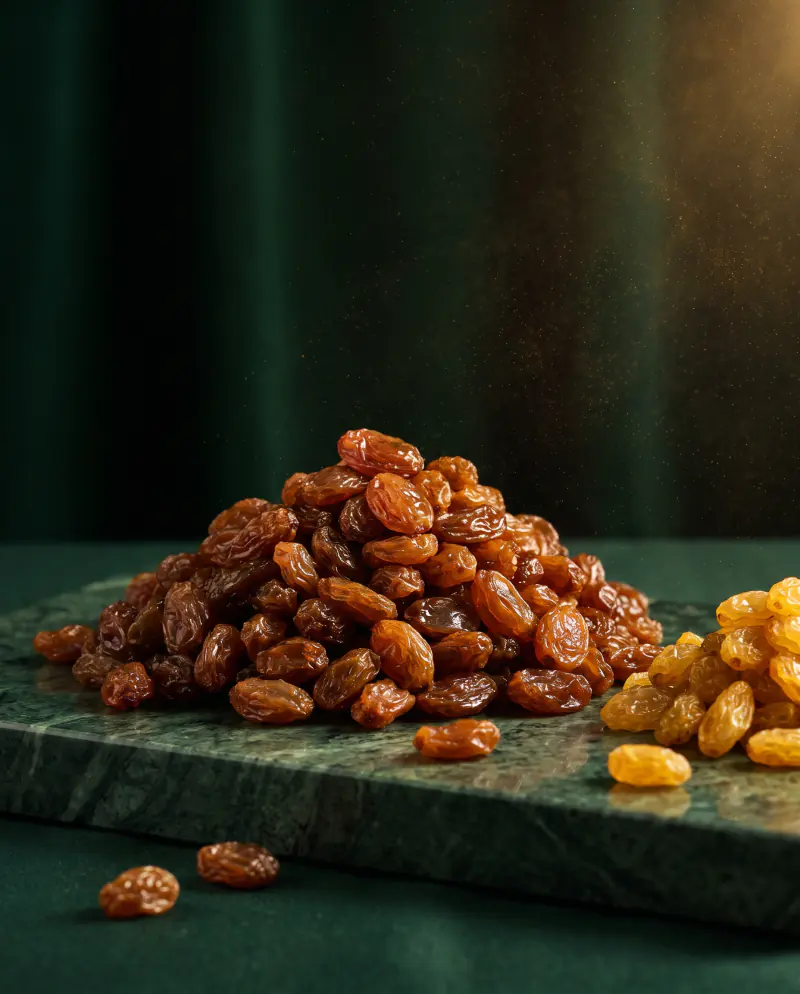
Vineyards in Manisa were reported to be in very good condition and season exports had not yet reached 100,000 t; exporters began lowering their prices at the end of April. First field impressions in the Aegean point to a 2026/27 crop of 250,000–300,000 t, although the estimate is very early as flowering is still under way; colder nights in early May carry a slight local frost risk, but Manisa is not expected to be affected. As of 28 April, type 9 grade A was offered at €2.45/kg FOB Türkiye, while in the Netherlands Chilean flame jumbo stood at €2.44/kg and Chinese sultanas at €2.14/kg FCA.
250,000–300,000 tAegean 2026/27 sultana crop, first field impressions
Macadamia harvest begins with larger crops expected
A marked crop recovery is expected in Australia, and both South Africa and Kenya are expected to harvest more than last year; weeks of heavy rain in South Africa have raised quality and yield concerns. Limited carry-over stocks and strong kernel demand support prices: in the Netherlands, South African Style 1 trades at €12.75/kg and Kenyan Style 4L at €10.25/kg FCA, with the market balanced to slightly firm. New-crop shipments from Kenya started in April, while South Africa and Guatemala will begin shipping in May–June; suppliers are not fully satisfied with international demand.
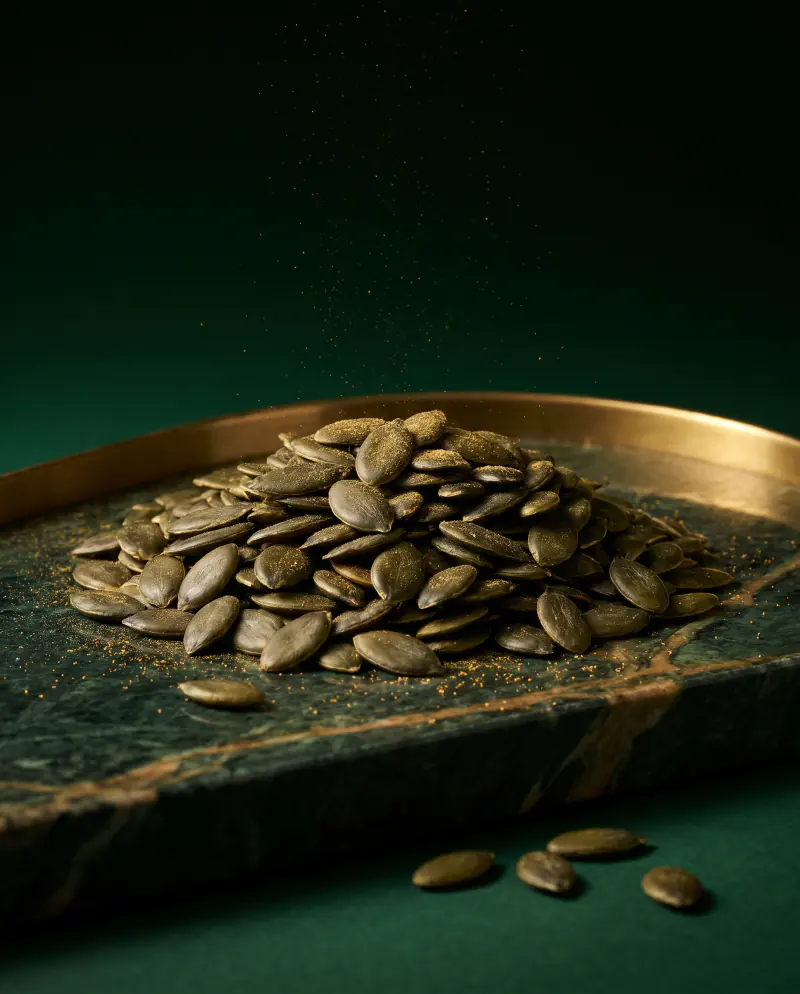
With China steering farmers towards crops with steadier domestic demand, pumpkin seed acreage is estimated to fall by 15–20% for both GWS and Shine Skin; goods meeting EU and UK requirements are scarce, and old-crop stocks have largely been sold. At the end of April, CFR offers stood at US$3,500/t for GWS A, US$3,870/t for GWS AA and US$3,970/t for Shine Skin AA, while FOB Beijing prices edged higher across all grades. Weather conditions for sowing in Xinjiang, Inner Mongolia and north-east China remain favourable.
−15–20%Expected change in China’s 2026 pumpkin seed acreage
According to the American Pecan Council’s February report, inshell-basis shipments for September–February fell 11% to 199 million lb, with February alone down 22%. Crop receipts rose 10% to 238.2 million lb and inventories 6% to 248.7 million lb, while inshell exports fell 43% and shipments to China 55%. Shelled exports to the Middle East dropped 25% to 3.4 million lb; Gulf shipments are being routed via Muscat and Jeddah, with freight and insurance costs rising.
On 13 April, Indian Bold 40/50 with skin was offered at US$1,245/t FOB and Java 50/60 at US$1,300/t; amid strong demand for planting seed, the government raised its selling prices and has so far sold 350,000 t of stocks. On 20 April, however, it was reported that continued government auctions and the arrival of the new crop at the end of June could cut prices by 12–15%, while export demand remains very weak because of the conflicts. Indonesia’s new import quotas and GAP certificate requirement, with a transition period ending on 7 May, may reduce near-term shipments to a market that takes about one third of India’s exports.
US$1,245/tBold 40/50 with skin, FOB India (13 April)
Black Sea sunflower steady as Ukraine starts sowing
In Ukraine, sunflower sowing was 6% complete at the start of the week of 20 April, covering 293,600 ha; rising oil and freight costs pushed raw material prices higher, while producers holding stocks are in no hurry to sell. At the end of April, black seed held flat over the month at €0.67/kg FCA Odesa and €0.58/kg FOB Odesa, while Bulgarian black seed was at €0.44/kg and Chinese striped seed at €1.45/kg FOB Beijing. The SAFEX May contract rose to ZAR 8,920/t on 29 April; the market has a mildly bullish tone but remains well supplied.
€0.58/kgBlack seed FOB Odesa (late April, flat over the month)
According to the INC global crop report published on 23 April, world production in 2025/26 fell to 21,020 t on a kernel basis (previous season: 33,400 t); output dropped from 26,000 t to 15,600 t in Bolivia and from 4,900 t to 3,920 t in Peru, with ending stocks down to 500 t. After the short crop, processors rushed for early 2026 volumes while deliveries progressed slowly, pushing raw material prices sharply higher; the boliviano’s appreciation under Bolivia’s new administration also limited the competitiveness of dollar-denominated exports. Early expectations point to an average 2026 harvest in both volume and grade profile, which could allow prices to ease.
21,020 tWorld Brazil nut production 2025/26, kernel basis (−37%)
Hormuz shut: Gulf cargo disrupted, Med freight eases
At the start of April the Strait of Hormuz had been effectively closed for about six weeks, and the situation did not change during the month; containers to Gulf states are moving via alternative routes, Maersk reported serious difficulties for Gulf export cargo and Gemini is adding capacity to Jeddah. Asia–Mediterranean freight (FBX13) eased from its mid-March peak of US$4,300/FEU to US$3,527/FEU on 28 April, below pre-war levels; bunker prices, however, were still about 55% above pre-war levels as of 21 April. On 22 April the Central Bank of the Republic of Türkiye held its policy rate at 37% and said it was closely monitoring the inflationary impact of energy prices kept high by geopolitical tensions; on the morning of 30 April the US dollar traded at TRY 45.18, up 1.6% from the start of the month.
US$3,527/FEUAsia–Mediterranean freight (FBX13), 28 April
Sources (5)
Freightos — Freight rates elevated but mostly level as war stretches on – April 07, 2026 Update 2026-04-07